One-time payment of ₹499 • Instant PDF access • Lifetime access • 🤖 KidsMap AI Coach – Free Trial Included
Your child's brain is most receptive to these changes before age 7.
Every day you wait, patterns become harder to reshape.
Built on 15+ Years of Research in Child Development
This guide synthesizes decades of proven science in neuroscience, developmental psychology, and attachment theory—specifically adapted for Indian families.
Created for busy parents who want clear, research-backed answers without the guilt, overwhelm, or Western advice that doesn't fit our reality.
The Reality Indian Parents Face
You're flooded with conflicting advice—from grandparents, pediatricians, WhatsApp groups, and Instagram experts. Everyone has an opinion. Much of it conflicts.
Meanwhile, the pressure is immense:
Competitive schools and early academics
Screen time battles
Constant comparison with other children
The race for marks and admissions
Guilt about whether you're doing enough
But here's the truth:
The most important work isn't happening in coaching classes or activity centers.
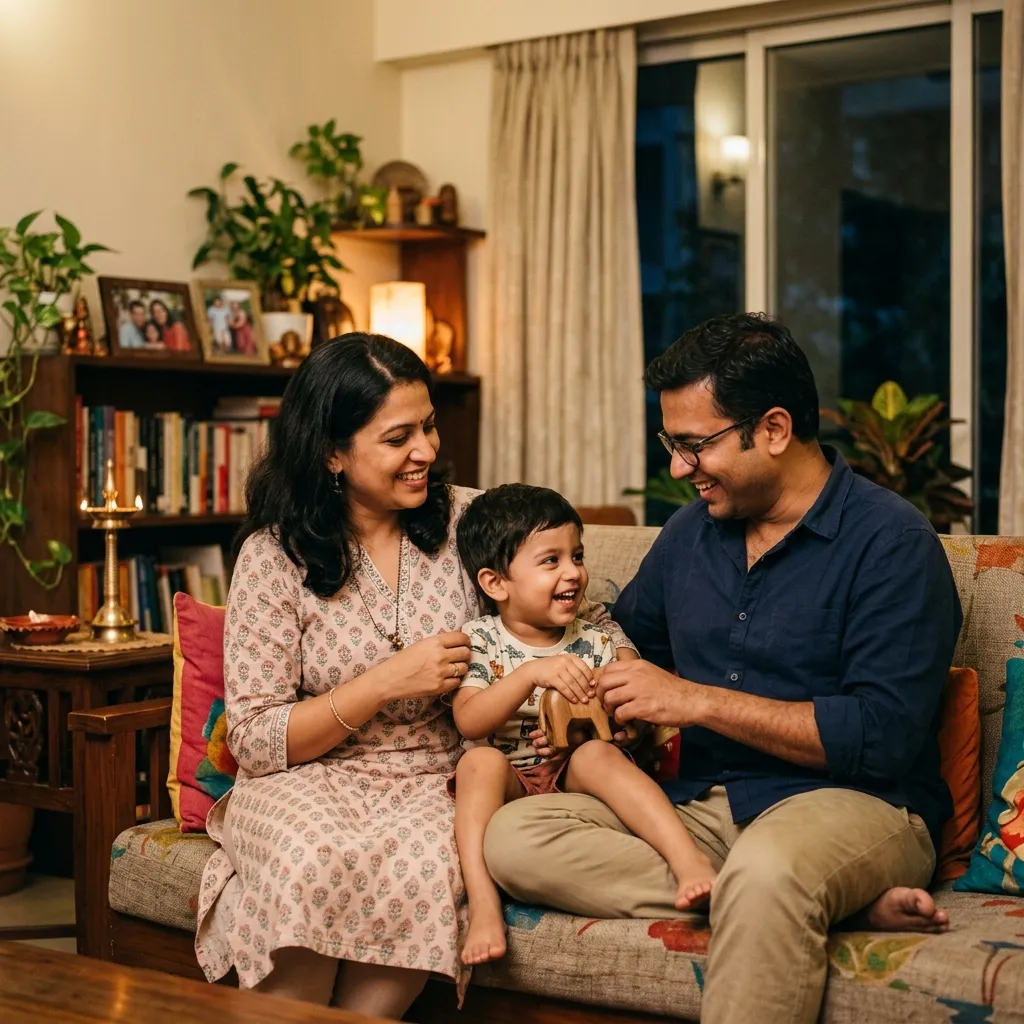
It's happening quietly at home, in everyday moments—how you speak, respond, and guide your child through the first 12 years.
These years shape:
→Brain wiring (how your child processes information)
→Emotional resilience (how they handle stress and failure)
→Self-control (their ability to focus and delay gratification)
→Confidence (whether they believe in themselves)
→Character (their values and how they treat others)
What you do now sets the foundation for everything that follows.
🤖
Experience KidsMap AI – Your Personal Parenting Coach
Real questions Indian parents are asking right now — get a taste of instant, personalised answers whenever you need them.
😰
Parent asks:
"My child stole ₹10 today. What do I do?"
🤖 AI Coach:
Stay calm — this is normal. Use this proven 4-step script to turn it into a trust-building moment.
🥦
Parent asks:
"My 6-year-old refuses to eat vegetables!"
🤖 AI Coach:
Try the Rainbow Plate Game + 7 easy recipes kids actually love. Zero mealtime fights.
📱
Parent asks:
"How much screen time for a 7-year-old?"
🤖 AI Coach:
Exact science-backed limits + fun offline replacement activities that actually work.
🎁 Included with every purchase • Try KidsMap AI free with your guide
What Science Tells Us About the First 12 Years
🧠 Brain plasticity: A child's brain is building millions of connections every day, especially in the early years. These connections form the architecture for learning, emotion, and behavior.
🗓️ Sensitive periods: Certain developmental windows matter more than others. Ages 0–2 for attachment, ages 3–7 for self-regulation, ages 8–12 for identity formation.
🗣️ Daily interaction matters more than toys or classes: How you talk, listen, and respond teaches your child more than any flashcard or enrichment program.
❤️ Emotional safety enables learning: A calm, consistent environment lets the brain focus on growth instead of stress.
This isn't about being a perfect parent. It's about understanding what actually shapes your child—and making small, intentional choices every day.
What's Inside This 68-Page Guide
The 3 Brain-Building Windows (Ages 0–2, 3–7, 8–12) and what to focus on in each
17 Daily Micro-Practices (10–20 min each) that build emotional resilience
How to handle tantrums without yelling (Ages 2–5 breakdown)
The "Confidence Builder" framework for ages 6–10
Screen time guidelines backed by neuroscience (not fear)
What to say when your child says "I can't do it"
How to build focus and self-discipline (without constant nagging)
How to navigate academic pressure without crushing your child's spirit
Building curiosity and love of learning (beyond exam scores)
+ Dozens more specific, actionable strategies
What Makes This Different
Calm, not preachy: No mom-shaming, no guilt trips. Just clear, compassionate guidance.
Indian reality: Addresses joint families, grandparents' involvement, balancing traditions with modern insights, academic pressure, and limited time.
Long-term skills, not just marks: Focuses on emotional intelligence, resilience, curiosity, and independence—not just exam performance.
Age-specific strategies: Jump to the section relevant to your child's current age. Each is designed to be read and applied independently.
Designed for daily life: Each practice takes 10–20 minutes a day. No elaborate setups or expensive tools required.
Research-backed, jargon-free: Built on decades of neuroscience and developmental psychology—explained in simple, practical terms.
You don't need to overhaul your life. You need to understand what truly matters—and do a little bit, consistently.
What Parents Are Saying
★★★★★
"
"Before this guide, I was constantly yelling during my 4-year-old's tantrums. The 'Ages 3–5' section taught me how to respond calmly. Within 2 weeks, tantrums reduced by half. This paid for itself in peace of mind."
— Priya M., Bangalore (Mother of 2)
★★★★★
"
"As working parents managing a joint family, we were overwhelmed. This guide gave us clarity on what actually matters. We stopped stressing about expensive classes and focused on daily connection. Our 7-year-old is more confident now."
— Ankit & Neha V., Mumbai (Parents of 2)
★★★★★
"
"Very realistic for Indian families. The section on handling academic pressure without crushing creativity was life-changing. Loved the age-wise structure—I could jump straight to what I needed."
— Priyanka I., Bangalore (Mother of 1)
★★★★★
"
"Simple, practical changes that actually fit into our busy lives. We already see better communication at home. My 9-year-old is opening up more, and bedtime battles have almost disappeared."
— Sandeep R., Hyderabad (Father of 2)
Get the Complete Guide
Worth ₹4,999 (cost of just one child psychology consultation)
₹1,499₹499
Limited-time offer
One-time payment • Digital PDF • Instant access
Less than ₹42/month for 12 years of guidance Less than a single coaching class fee—but shapes your child's entire future
🤖 Bonus Included: KidsMap AI Parenting Coach — Experience your AI-powered parenting assistant, free with your purchase.
🤖 KidsMap AI Coach – Free trial experience included
❤️ This Is Not Just a Guide. It's a Shift in How Your Child Sees Themselves.
One calm response instead of shouting.
One encouraging sentence instead of criticism.
One daily 10-minute connection ritual.
These small moments compound over years.
Children who feel emotionally safe at home grow into adults who:
Believe in themselves
Handle failure without breaking
Stay curious instead of fearful
Build strong, healthy relationships
The question is not whether parenting shapes your child.
It always does.
The question is: will it be intentional?
Why Parents Who Wait Often Never Return
You're busy. We get it.
But here's what happens when parents bookmark this for "later":
Life gets busier (not slower)
Your child's brain keeps developing (habits form whether you guide them or not)
The window for easy changes gets narrower (what takes 2 weeks now might take 6 months later)
You lose the compound effect (small changes today = massive impact by age 12)
The guide takes 10 minutes to download and start reading.
Your child's future takes 12 years to shape.
Which matters more—waiting for the "perfect" time, or starting today?
Frequently Asked Questions
No. It's for any parent with children aged 0–12. Whether you're expecting, have a toddler, or are navigating the primary school years, this guide offers age-specific insights and practical actions. Many parents with multiple children find it helps them understand each child's developmental stage better.
Yes. The guide acknowledges Indian family structures and offers strategies that work when grandparents, relatives, or helpers are involved. It focuses on principles you can apply regardless of who else is around, and includes tips for maintaining consistency across caregivers.
No. While the science is universal (brain development works the same everywhere), the application is tailored for Indian contexts—including cultural values, academic pressures, extended families, and local realities. We honor Indian family values while applying modern developmental science.
Most parenting books are either too theoretical or too specific to one method. This guide synthesizes research across multiple disciplines (neuroscience, developmental psychology, attachment theory), strips away the jargon, and gives you age-specific, actionable practices—all in one concise 68-page PDF designed for busy Indian parents.
Not at all. You can jump to the section relevant to your child's current age. Each section is designed to be read and applied independently. Many parents read the section for their child's age first, then come back to earlier or later sections as needed. Revisit sections as your child grows.
The brain remains adaptable throughout childhood. While earlier is better, it's never too late to start making intentional, positive changes. Many practices in this guide apply across ages. Some parents report seeing improvements within weeks of applying new strategies, even with older children.
All purchases are final. Due to the digital nature of this product, we do not offer refunds once the PDF has been delivered. Please review the product details carefully before purchasing.
Yes! Once you purchase, you can share the PDF with your spouse or immediate family members for personal use. We actually encourage both parents to read it for consistency in parenting approach. Please do not distribute it publicly or resell it.
Immediately after purchase, you'll receive an email with a download link to the PDF. You can read it on any device—phone, tablet, computer—or print it out. The PDF is yours to keep forever.
₹499 is a one-time payment. No recurring charges, no hidden fees. Pay once, keep the guide forever.
Your Child's First 12 Years Are Happening Right Now
You can't pause time. But you can understand what shapes your child's brain, character, and future—and act on it today.